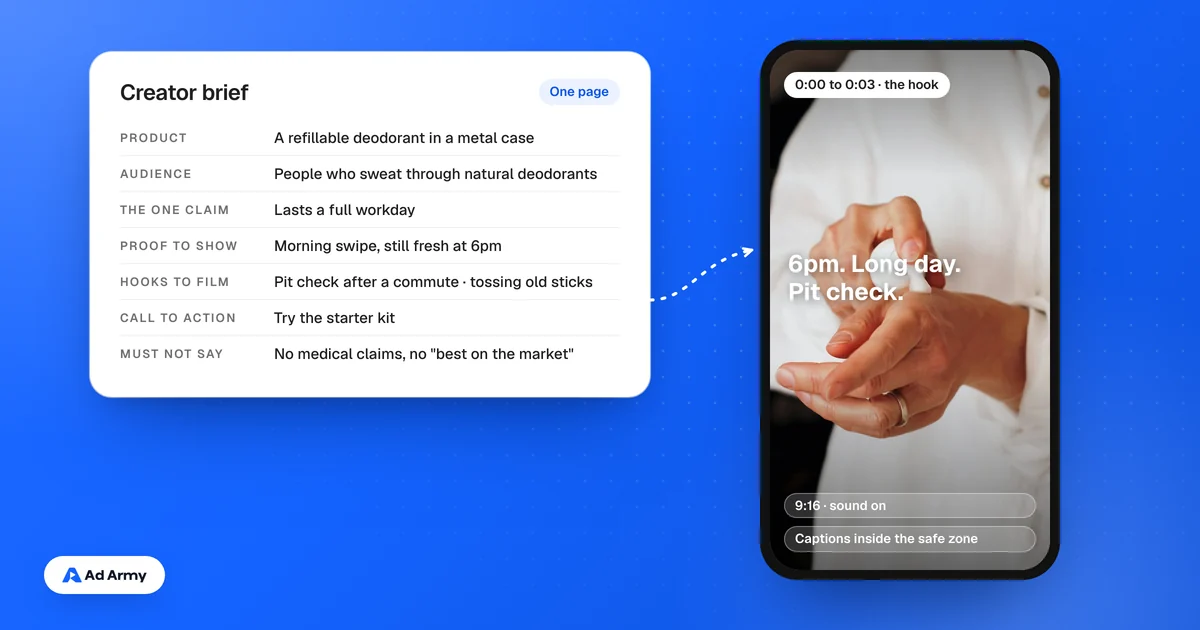
Why a paid brief is different from an organic one
An organic post only has to fit the creator's feed. A paid ad has to stop a stranger mid-scroll, make one point fast and survive being cut into variations. That changes the brief in three ways: the opening matters more than anything else, the claims have to be ones you can stand behind in an ad, and the file has to meet platform specs so it can run at all.
When videos come back unusable, the cause is often the brief, not the creator. Our guide to paying only for approved UGC videos covers how to agree on revisions before anyone films.
The one-page brief template
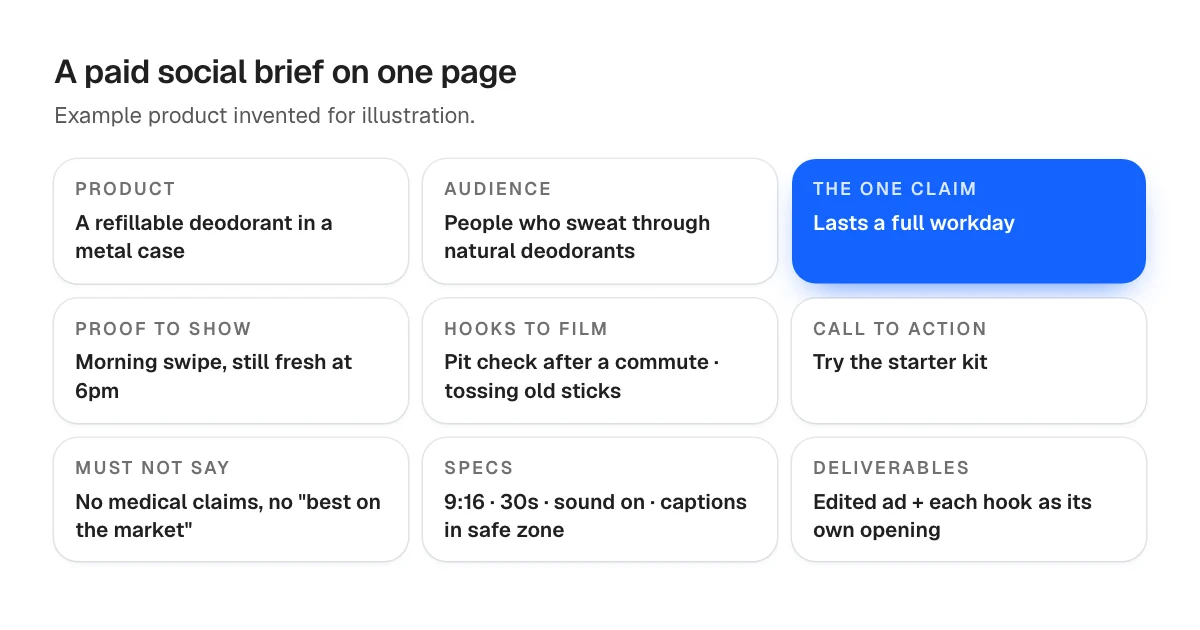
| Field | What to write | Example |
|---|---|---|
| Product | What it is, in one sentence | A refillable deodorant in a metal case |
| Audience | Who you want to stop scrolling | People who sweat through natural deodorants |
| The one claim | The single point the video must land | Lasts a full workday |
| Proof to show | What the camera should see | Applying in the morning, still fresh at 6pm |
| Hooks to film | Two or three openings, as ideas | Pit check after a commute; tossing old sticks |
| Call to action | What the viewer should do next | Try the starter kit |
| Must not say | Claims you can't support | No medical claims, no "best on the market" |
| Specs | Format, length, sound, captions | 9:16, 30 seconds, sound on, captions in safe zone |
| Deliverables | Files, variations and due date | Edited ad plus each hook as a separate opening |
| Usage | Where and how long it will run | Paid social, no end date |
The example column is invented for illustration. Keep yours this short; a creator can follow nine clear lines better than three pages of brand guidelines.
Give hooks as ideas, not scripts
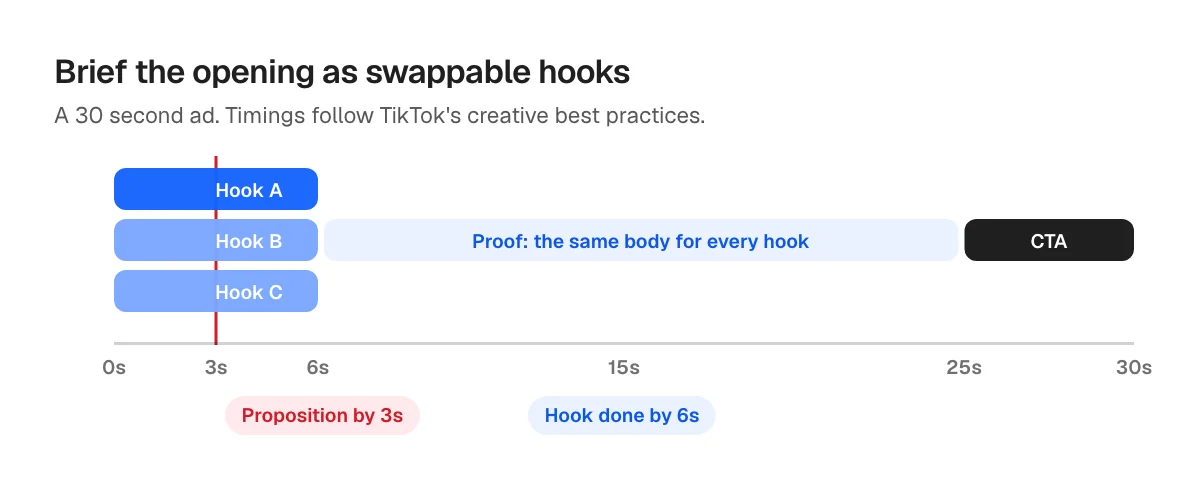
The opening seconds decide whether anyone sees the rest. TikTok's creative best practices recommend putting your hook in the first 6 seconds and introducing your proposition in the first 3.
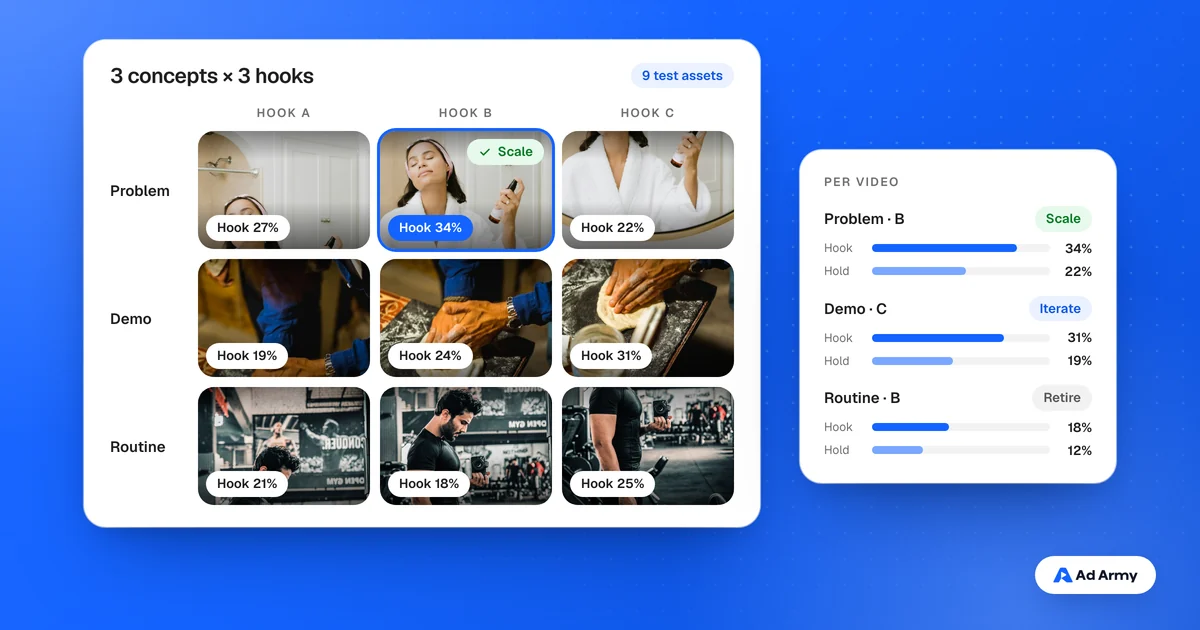
Brief the hook as a situation or a line of thought, and let the creator say it their way. A word-for-word script tends to sound read, which is the opposite of why you hired a creator. Ask for each hook to be filmed as its own opening so you can test them against the same body; our guide to how many UGC videos you need for creative testing explains why that matters.
For example, instead of the line "Our deodorant lasts all day, try it now", write the hook as a situation: "Open at 6pm after a long workday with a quick pit check, then show the product." The creator decides the words; you decide the moment that has to be on screen. Two or three of these give you real variation without three separate shoots.
Specs that keep a video runnable
A video that ignores the format may be rejected, cropped or covered by the app's buttons. Put these in every brief:
- Vertical 9:16, filmed in at least 720p, per TikTok's creative best practices
- Sound on, with music or voice; TikTok recommends including sound
- Text inside the safe zone, so captions and product names aren't hidden by the interface
- On-screen text kept short; TikTok suggests 5 to 10 words per second when using text
- Length stated, such as 15, 30 or 60 seconds
- No platform watermarks on files you plan to run on another platform
Claims and disclosure belong in the brief
Paid content still has to be honest. The FTC's Disclosures 101 for Social Media Influencers says a creator can't talk about experience with a product they haven't tried, and can't call a product terrific if they thought it was terrible. So send the product early enough for the creator to use it, and list any claims you need them to avoid.
The same guidance says disclosures should be hard to miss and placed with the endorsement itself, and notes that viewers are more likely to notice disclosures made in both audio and video. Agree in the brief how the ad will be labeled, especially if it will run from the creator's own account.
Mistakes that cause reshoots
- The brief asks for three messages, so the video lands none of them
- Hooks are scripted word for word and sound read aloud
- The product arrives too late for the creator to try it properly
- Specs are missing, so the video is horizontal, silent or crowded with text
- Claims to avoid aren't listed, so a good take can't run
- Deliverables are vague, so you get one file instead of separate hooks
How Ad Army handles briefs
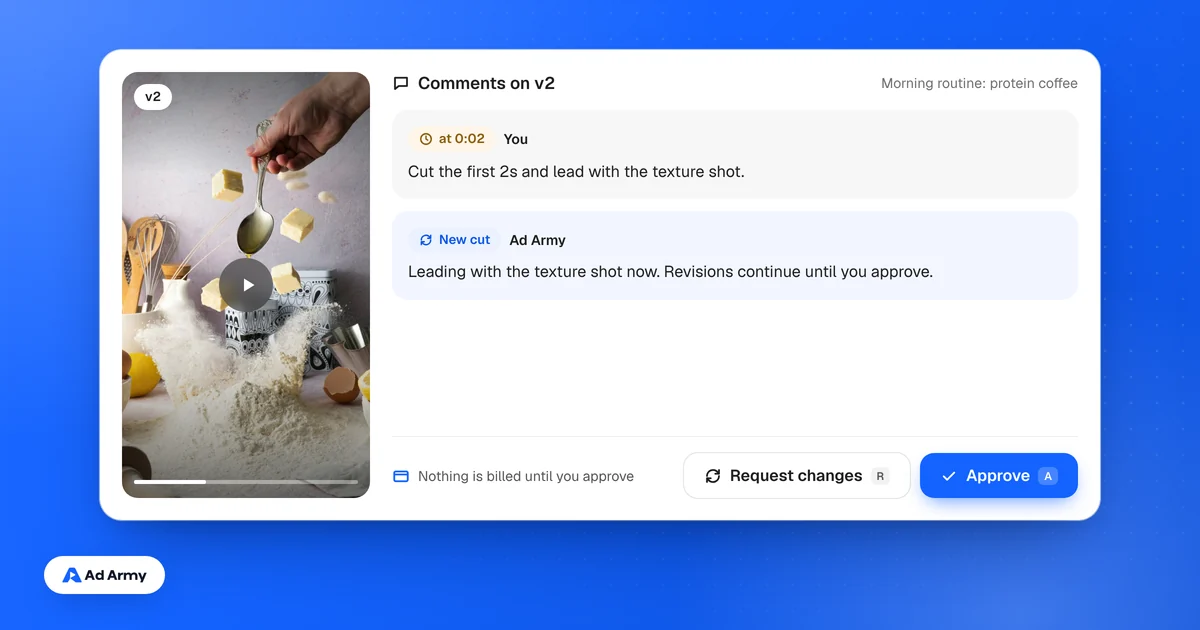
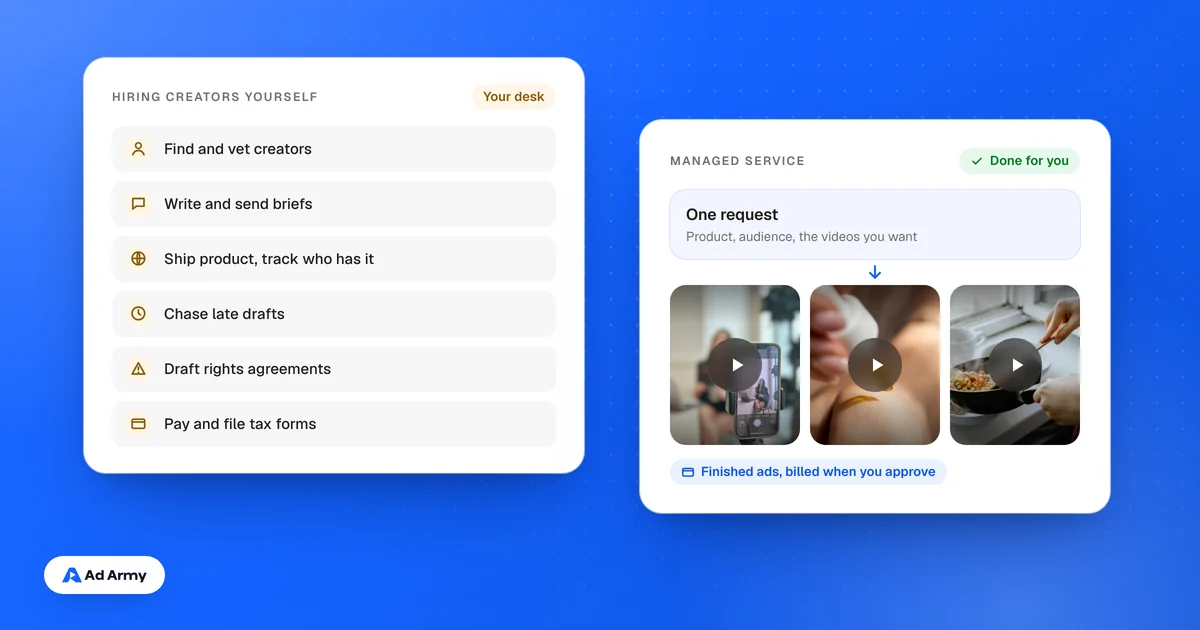
At Ad Army, you don't write a creator brief at all. You submit a request describing your product, audience and the videos you want, starting from a template if you like, including the hooks you want tested and any must-say lines. We turn it into the brief our creators work from, and revisions continue until you approve.
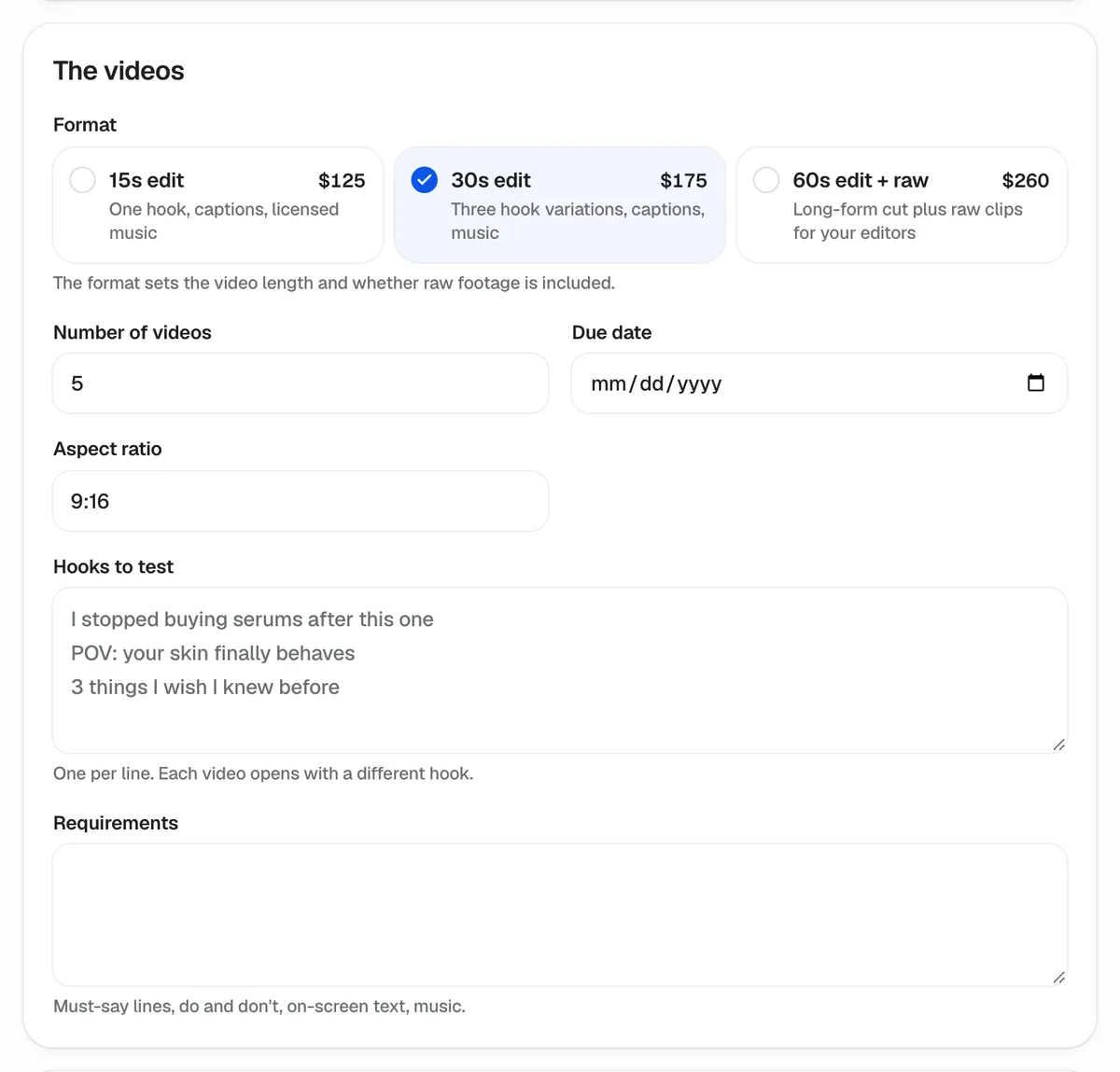
You pay a flat price per approved video, with full rights included.