
What a beauty brand needs from a UGC service
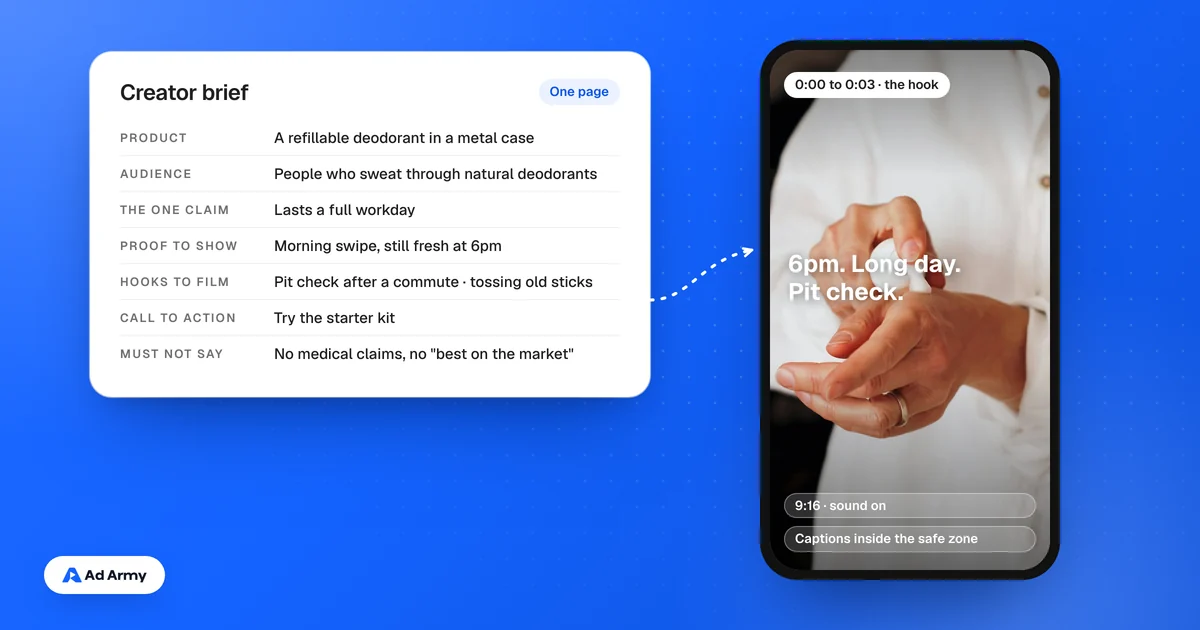
In beauty, the script carries legal weight and the product must look right on real skin. A good service casts creators whose skin, hair or shade fits the product, gets genuine use on camera, and keeps the script inside claims you can support. The service films; you decide which claims are allowed and hold the evidence. Our guide on how to brief UGC creators for paid social covers brief structure; this article covers what changes for beauty.
The claims line: cosmetic or drug
The FDA classes a product by its intended use. Its page Is It a Cosmetic, a Drug, or Both? says intent can come from labeling, advertising, what consumers perceive, and ingredients known for a therapeutic use. A creator's ad is advertising.
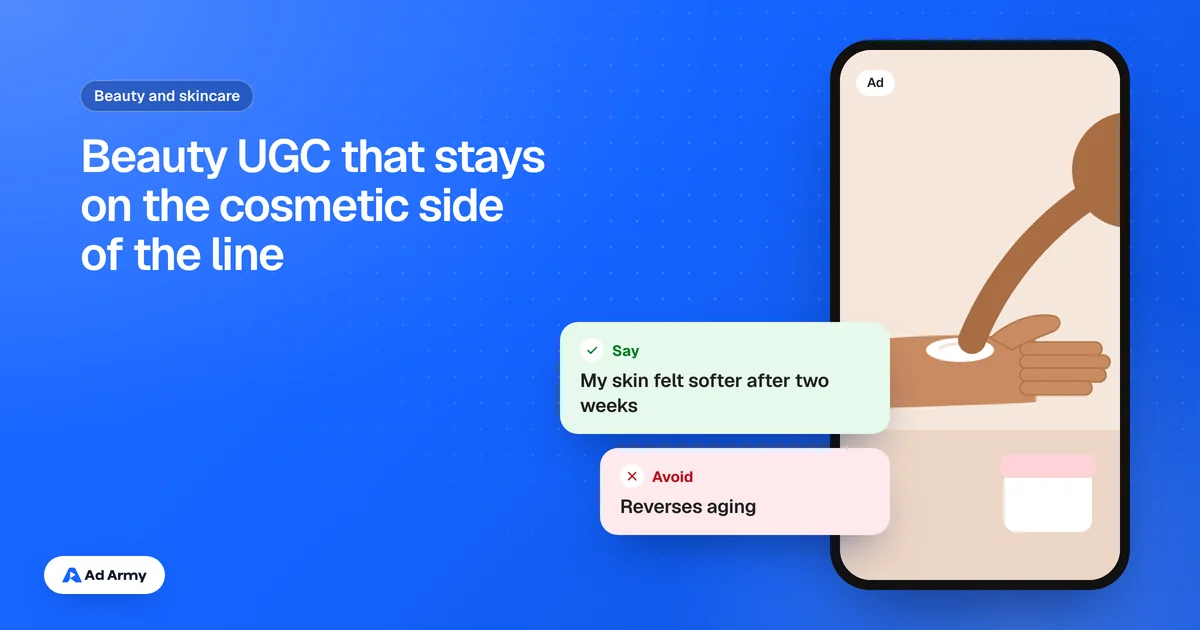
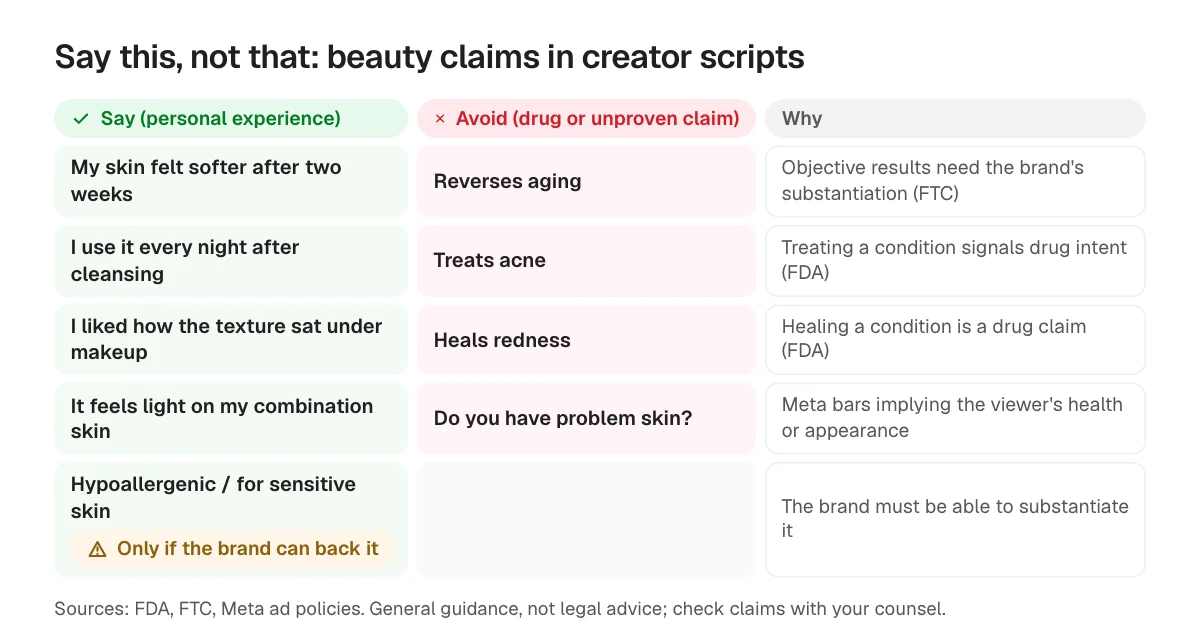
The same page lists skin claims that point to a drug: reducing cellulite, changing melanin production, regenerating cells. Acne-treating cleansers are drugs, or both, and a moisturizer or makeup with sun protection must meet both sets of rules. A creator saying a serum "treats acne" can pull the product toward drug territory, whatever the label says.
The page does not ban the word "anti-aging." Treat it, and wording about wrinkles or collagen, as a risk flag to clear with counsel. MoCRA, the 2022 cosmetics law, covers safety records and adverse event reporting, not ad claims; if a creator reports a reaction, route it to your adverse event intake.
What the FTC and ad platforms expect
FTC rules for creator ads
The FTC's Endorsement Guides Q&A says endorsements must reflect the creator's honest opinion, and a material connection, including free product, must be disclosed clearly in the video itself, early and near the claim. "#ad" is a clear example; vague tags like "#partner" may not be enough. Brand and creator are both responsible.
The Consumer Reviews and Testimonials rule, in effect since October 21, 2024, bans fake or false testimonials and treats hired influencer posts as testimonials. The FTC's Health Products Compliance Guidance says health claims need competent and reliable scientific evidence; testimonials alone are not enough. If the ad says "fewer fine lines in two weeks," have substantiation on file before it runs. A creator's own result is not substantiation.
Meta and TikTok rules that shape beauty hooks
Meta's Health and Wellness ad policy restricts cosmetic products and procedures shown in before and after transformations, and requires 18+ targeting for cosmetic ads, with creams, makeup and hair products exempt from the age limit. It is not fully clear how before-and-after applies to everyday skincare, so favor real use and texture over dramatic transformations.
Meta's Personal Attributes policy bars ads that imply a viewer's health or medical condition. "Struggling with acne?" aimed at the viewer is risky; "I've had breakouts since college" in the creator's voice is safer.
TikTok's weight management and body image policy bars body shaming and implying an ideal body type. We found no TikTok ad policy page specific to skincare claims, so check its current policies before launching there.
Casting and shooting beauty UGC
This is practical guidance, not regulation.
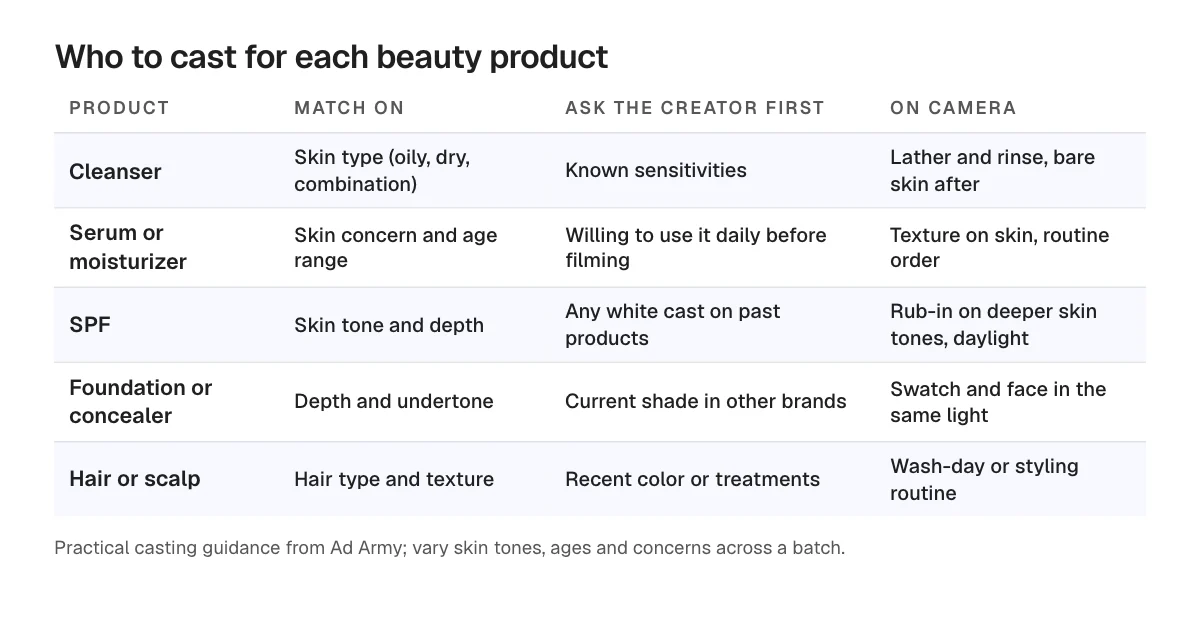
- Cast by fit. Match skin type and concern, and vary skin tones, ages and concerns across a batch, as Billo's beauty and skincare guide also recommends.
- For shade products, cast across depth and undertone, and film swatch and face in the same light.
- Give creators time with the product. Someone who opened the box that morning cannot honestly describe two weeks of use.
- Ask about sensitivities before shipping, and keep "hypoallergenic" out of scripts unless the brand can back it.
- Show texture and application on skin, not just packaging.
- Put the disclosure in the video, early, not only in the caption.
How to compare beauty UGC services
Model
- Ad Army
- Fully managed; we cast from a vetted roster
- LushHook
- Studio focused on beauty, skincare and wellness
- Billo
- Marketplace, plus a managed service from $2,000 a month
Published price
- Ad Army
- $125 (15s), $175 (30s), $260 (60s plus raw), per approved video
- LushHook
- $249 per video; $399 for 3 videos; $699 for 6
- Billo
- From $99 per video, varying by length, format and creator
Revisions
- Ad Army
- Until you approve
- LushHook
- 1 round on the single video; 3 on the 3-video pack
- Billo
- 2 rounds per video
Usage rights
- Ad Army
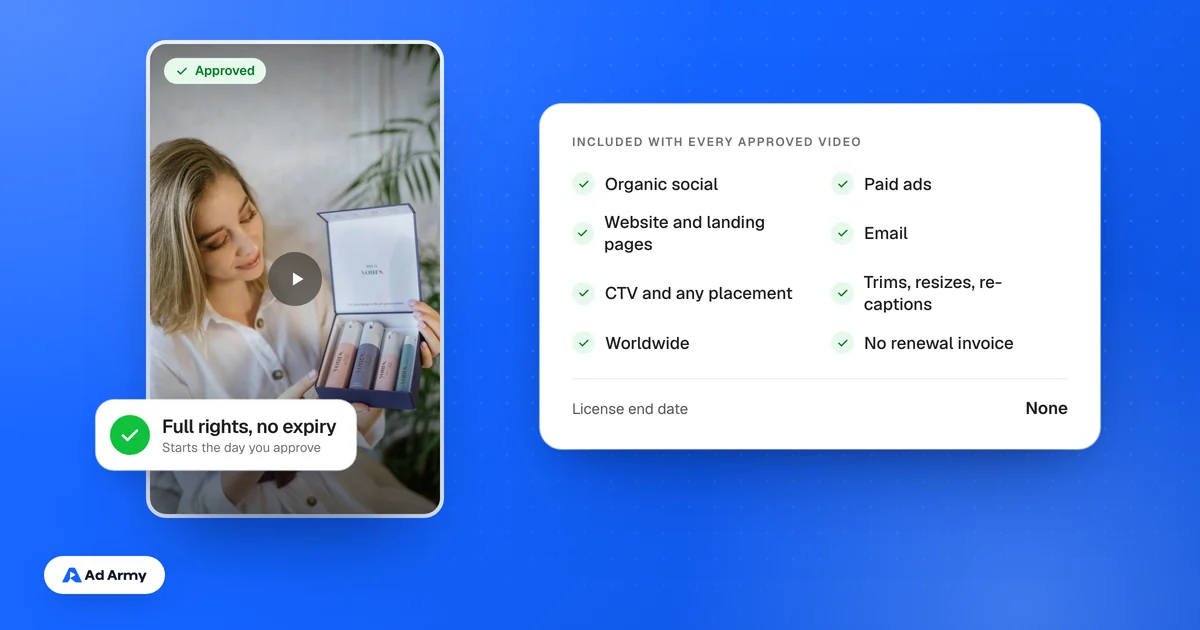
- Full rights, organic and ads, no expiry
- LushHook
- Full usage and paid-media rights, no expiry
- Billo
- Assigned to you on approval, worldwide, no time limit
Spark or partnership ads
- Ad Army
- +$50 per video, only if the creator accepts
- LushHook
- Not published
- Billo
- Paid add-on, priced by each creator
Who picks creators
- Ad Army
- We do; creators stay anonymous
- LushHook
- Not published
- Billo
- You browse, invite or choose
Claims review
- Ad Army
- Brand substantiates claims; creators promise honest, genuine use
- LushHook
- Not published
- Billo
- Its beauty guide advises listing claims to avoid in the brief
| Item | Ad Army | LushHook | Billo |
|---|---|---|---|
| Model | Fully managed; we cast from a vetted roster | Studio focused on beauty, skincare and wellness | Marketplace, plus a managed service from $2,000 a month |
| Published price | $125 (15s), $175 (30s), $260 (60s plus raw), per approved video | $249 per video; $399 for 3 videos; $699 for 6 | From $99 per video, varying by length, format and creator |
| Revisions | Until you approve | 1 round on the single video; 3 on the 3-video pack | 2 rounds per video |
| Usage rights | Full rights, organic and ads, no expiry | Full usage and paid-media rights, no expiry | Assigned to you on approval, worldwide, no time limit |
| Spark or partnership ads | +$50 per video, only if the creator accepts | Not published | Paid add-on, priced by each creator |
| Who picks creators | We do; creators stay anonymous | Not published | You browse, invite or choose |
| Claims review | Brand substantiates claims; creators promise honest, genuine use | Not published | Its beauty guide advises listing claims to avoid in the brief |
Sources: LushHook's site; Billo's pricing page, FAQ for brands, terms and partnership ads page; and Ad Army's pricing and rights pages.
LushHook describes itself as a studio focused on beauty; Billo suits brands that want to pick creators. See also UGC platforms compared and what UGC costs per video in 2026.
We make Ad Army, so weigh our row accordingly. Competitor details come from their public pages as of October 16, 2026; prices change. LushHook and Billo are trademarks of their owners; Ad Army is not affiliated with either.
How Ad Army handles beauty orders
You describe the audience and who should be on camera in the brief, and list do-not-say claims under requirements. We cast from our vetted roster against a due date from 10 days out. You supply the product. Our terms ask creators to show genuine use and give their honest opinion, with no results they did not get and no medical claims outside the brief, and make the brand responsible for substantiating its ad claims. You pay only for approved videos. To run one from the creator's handle, see our Spark Ads setup guide.
Pre-launch checklist
- Every claim is personal experience or backed by evidence you hold
- No treat, heal or cure claims unless the product is a regulated drug
- Creators cast for skin type, concern, depth and undertone
- Product shipped early enough for real use
- Disclosure in the video, early and clear
- Before-and-after checked against current Meta and TikTok policy
- Usage rights cover paid ads for as long as you run them